







Weather in USA: Heat, Flash Flooding and Severe Storms Raise Weekend Concerns

Weather in USA is turning more active as summer begins, with several regions facing different threats at the same time. From flash flooding in the central states to extreme heat in the Southwest, millions of Americans are watching the forecast closely this weekend.

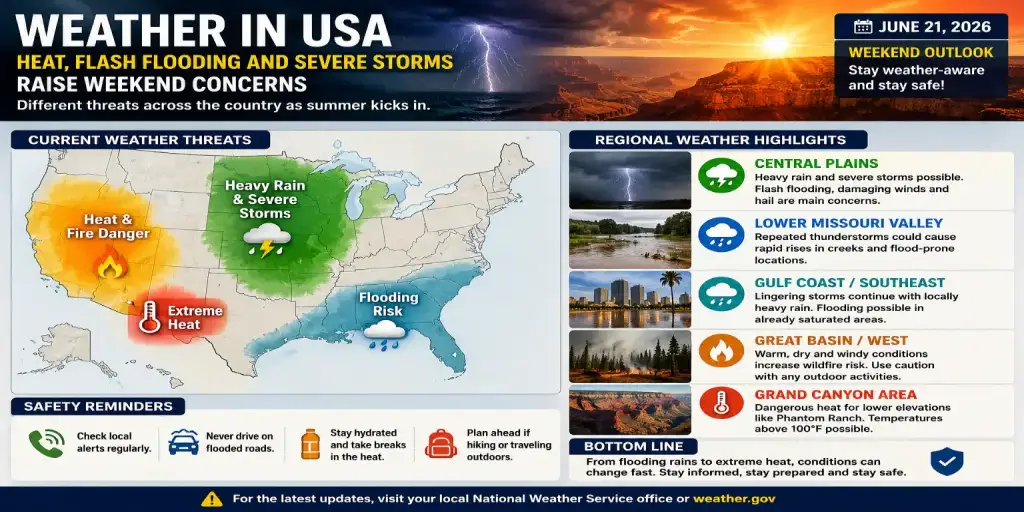
The biggest concern is heavy rain and severe thunderstorms across the central part of the country. Forecasters are watching the Central Plains and Lower Missouri Valley, where repeated rounds of storms could bring flooding problems. Areas including parts of Nebraska, Kansas, Missouri and Iowa may see intense rainfall in a short period.

That kind of setup can become dangerous quickly. When storms move over the same communities again and again, streets can flood, creeks can rise, and drivers can face water-covered roads with little warning.

USA Weather Update: A Busy Start to Summer

The Gulf Coast and parts of the Southeast are also dealing with lingering storm chances. Soils in some areas are already wet from recent rain, which means even a short burst of heavy rainfall could create localized flooding.

For residents, the advice is simple: check local alerts before traveling, avoid flooded roads, and do not assume familiar routes are safe after storms.

Heat and Fire Weather Add More Risk in the West

While parts of the country are dealing with heavy rain, the West is facing a very different problem: heat, dry air and fire danger.

The Great Basin and Intermountain West are seeing conditions that can increase wildfire risk. Warm temperatures, low humidity, gusty winds and dry fuels can help fires spread faster if lightning or human activity sparks a flame.

The Grand Canyon area is also under serious heat concern. Lower elevations, including Phantom Ranch, are expected to face dangerous heat, with temperatures rising above 100°F and possibly reaching extreme levels. The heat risk is especially serious for hikers because the inner canyon can become much hotter than the rim.

Visitors should avoid hiking during the hottest part of the day, carry enough water, use electrolytes, and take heat warnings seriously. Heat exhaustion and heatstroke can happen faster than many people expect, especially during long outdoor activity.

What Americans Should Watch Next

This national weather pattern shows how different summer risks can happen at the same time. One region may be facing flash flooding, while another is dealing with dangerous heat and fire concerns.

Here is a quick look at the main weather threats:

Region

Main Concern

What to Watch

Central Plains

Heavy rain and severe storms

Flash flooding, damaging winds, hail

Lower Missouri Valley

Repeated thunderstorms

Rapid rises in creeks and roads

Gulf Coast/Southeast

Lingering storms

Local flooding in saturated areas

Great Basin/West

Dry, windy weather

Elevated wildfire risk

Grand Canyon area

Extreme heat

Heat illness, dangerous hiking conditions

For people planning road trips, outdoor events or weekend travel, local forecasts are more important than ever. A national weather update gives the big picture, but conditions can change block by block during severe storms.

Families should keep phones charged, monitor weather alerts, and know where to go if warnings are issued. Drivers should never cross flooded roads. Outdoor workers and hikers should take frequent breaks, drink water before feeling thirsty, and avoid long exposure during peak afternoon heat.

The current weather in USA is a reminder that summer can bring more than sunshine. Heat, storms, flooding and fire danger can all arrive in the same forecast window.

The safest move is to stay weather-aware, follow local National Weather Service alerts, and make plans flexible until conditions improve.