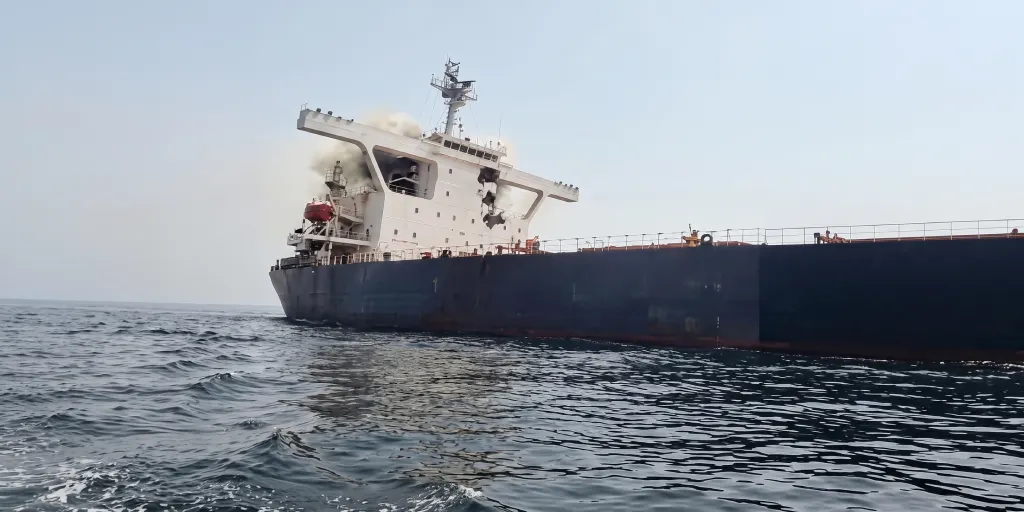
The waters of the Strait of Hormuz turned chaotic this week. Two vessels went down after being hit by projectiles in one of the most important shipping lanes on the planet. One of them was the Singapore-flagged container ship GFS Pride, which reportedly sank after an impact that may have come from a projectile or a naval mine. The incident has rattled an already tense maritime corridor and put shipping companies, navies, and energy traders on edge.
Early reports say the GFS Pride was sailing through the narrow waters of the strait when disaster hit. Crew members described a sudden, violent blast that ripped into the hull. Water poured in faster than anyone could manage, and the ship started going under within minutes.
A second vessel nearby suffered the same fate. Authorities confirmed it was also struck by a projectile. The fact that both ships sank so close together has fueled speculation that this was no accident. Many believe it points to a deliberate escalation in a region that has seen plenty of conflict over the years.
Security analysts are now trying to figure out whether the strikes came from an anti-ship missile, a drone-launched projectile, or a drifting naval mine. All three have troubled these waters before.
To grasp why this story is making headlines everywhere, you need to look at the map. The Strait of Hormuz is a slim passage linking the Persian Gulf to the Arabian Sea. At its narrowest point it measures barely 33 kilometers across, yet nearly a fifth of the world’s oil supply flows through it every day.
That makes it a pressure point for the whole global economy. When ships sink here, it stops being just a maritime tragedy. It becomes a threat to oil prices, supply chains, and the trade routes that nations depend on. Even a hint of trouble in this corridor pushes insurance costs higher and forces shipping firms to rethink their plans, often adding days and serious money to their voyages.
Rescue teams sprang into action the moment distress signals went out. Nearby ships and regional coast guard units rushed toward the scene, fighting both the darkness and the dangerous aftermath of an explosion at sea.
The crew of the GFS Pride went through a nightmare. Abandoning a sinking ship in open water is one of the most dangerous things any sailor can face. Full details on survivors and casualties are still coming in, but officials have stressed that getting every crew member to safety is the main goal.
For the families waiting on shore, these are agonizing hours. Behind every shipping headline are real people. Engineers, navigators, deckhands. Their lives were thrown into chaos in a single moment.
One of the biggest questions is what actually caused the blast. Investigators are looking at two main possibilities.
The first is a projectile strike, meaning an anti-ship missile or a weaponized drone. These attacks are precise and deliberate. They almost always point to a human decision behind the trigger.
The second is a naval mine. This is a hidden underwater explosive that drifts quietly until a passing hull sets it off. Mines are frightening because they do not discriminate. One can sit dormant for months before striking without warning.
Figuring out which weapon caused the damage is not just a technical matter. It could shape the entire story. The answer points either to a targeted attack or to the lingering danger of weapons left scattered across contested waters.
The moment the news broke, the shockwaves spread far beyond the strait. Oil markets, always jittery about Middle Eastern tension, braced for a rough ride. Shipping firms with vessels due to pass through the area started weighing their options, with some considering expensive detours.
Insurance companies began recalculating risk at the same time. When a shipping lane turns into a possible war zone, the cost of protecting a single voyage can climb fast. Those costs eventually reach ordinary people in the form of pricier fuel and goods.
This is the hidden side of maritime incidents. They rarely stay out at sea. One explosion in a narrow strait can shake economies on the other side of the world.
The Strait of Hormuz has a long and troubled history. It has seen tanker wars, mine-laying campaigns, and countless standoffs between rival powers. Every new incident reopens old wounds and reminds everyone how fragile peace in these waters really is.
The sinking of the GFS Pride and its companion vessel adds a fresh chapter to that volatile story. Whether it was a deliberate attack or a tragic run-in with a forgotten mine, the message is the same. This corridor is still one of the most dangerous stretches of water anywhere.
Navies from several nations patrol these waters because the stakes are so high. Even so, their presence could not stop this latest disaster. That alone shows how hard it is to fully secure such a vital passage.
Expect a burst of activity in the coming days. Investigators will sort through debris and survivor accounts, hoping to work out exactly what sank these ships. Governments will release statements, some cautious and some pointing fingers. And the shipping industry will watch closely, knowing its lifeline runs right through these troubled waters.
For now the strait is still open, but everyone is on high alert. Every captain steering through its narrow channel will do so carefully, aware that danger may still be hiding beneath the calm surface.
The sinking of the GFS Pride is more than a news item. It is a sharp reminder of how one moment at sea can send shockwaves around the world, and how the thin blue line of the Strait of Hormuz keeps the global economy balanced on a knife’s edge.