The Expanded FIFA World Cup 2026 Will Change International Soccer Forever
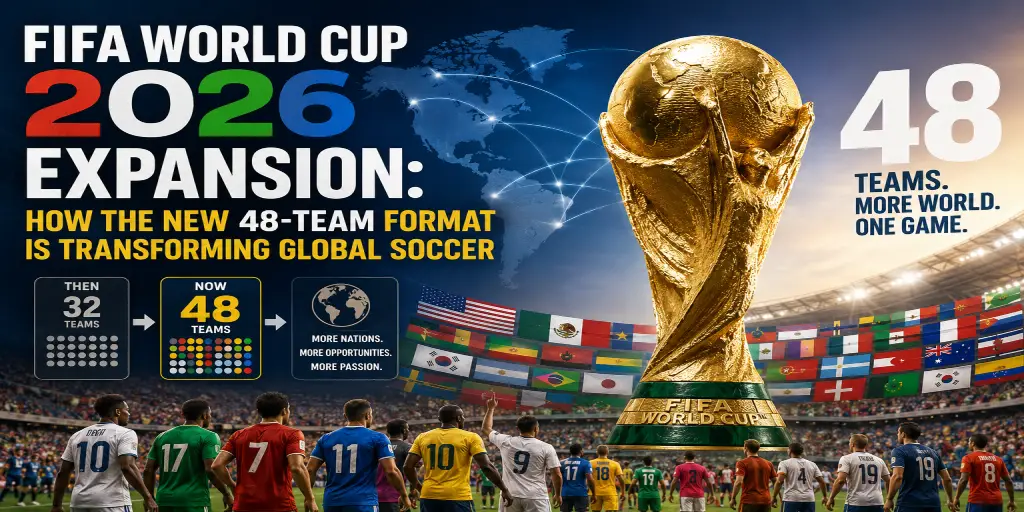
The FIFA World Cup 2026 is already shaping up to be one of the most important tournaments in football history. For the first time in the history of the competition, the competition has been expanded from 32 teams to 48 teams, giving more opportunities to nations across the globe to compete on the sport’s biggest stage. The U.S., Canada and Mexico hosting the tournament is bringing more global interest, new rivalries and new energy to international football than ever before.
For years, many talented national teams had difficulty qualifying for the World Cup due to the limited number of spots available. That reality has changed with the new format. Now, there’s a better chance for emerging football nations to get in, and fans get to see teams and players who may never have made the tournament under the old format.”
One of the biggest talking points of the 2026 World Cup has been the introduction of new countries making their first appearance on the world stage. Football fans worldwide are taking notice of such countries as Cape Verde, Jordan, Uzbekistan and Curaçao. Their qualification stories are a celebration of the game’s spread beyond traditional football powerhouses Brazil, Germany, Argentina and France.
The new format has also led to more competitive matches throughout the group stage. Fans are witnessing a more varied and less predictable tournament, rather than the same nations dominating year after year. The underdogs are taking precious points and a couple of rising teams have already shown they can play with some of the best teams in the world.
From a fan perspective, the new structure is a much more rich viewing experience. More teams means more games, more stories, more opportunities for drama. Every match matters as teams battle for the two top spots in their groups and for possible qualification as the best third-placed finishers.
The United States has become a major focus of the tournament. There are thousands of international visitors coming to stadiums across the country and the television audience continues to grow. Football has been steadily gaining in popularity in America in the last decade and the World Cup is giving the sport another major boost in visibility.
Experts believe the tournament’s long-term impact could be huge. The growth in youth participation, investment in football infrastructure and fan engagement will carry on well past the final whistle. Many industry analysts see the 2026 World Cup as a watershed moment that could help cement football as one of the top sports in North America.
Of course, not everyone was in support of the expansion when FIFA first announced the change. Critics argued that adding more teams might reduce the overall quality of competition. But the early part of the tournament has tested those concerns. Several lower-ranked countries have played impressively, proving that the international football talent is deeper than many people thought.
The success of these emerging teams shows that the global game is still evolving. Soccer development programs, better coaching and more investment in many regions have helped narrow the gap between traditional powers and developing countries. This has made the competition more exciting and even for the fans.
Looking ahead, the FIFA World Cup 2026 could set the template for international tournaments to come. The new format has created new opportunities, attracted larger audiences and generated a greater interest in the sport around the world. Even with the tournament still underway, one thing is already evident: the 48-team World Cup has reshaped the landscape of international football.
For fans in the United States and around the globe, the tournament is more than a competition. It’s a celebration of the growth of the game around the world. It’s a glimpse into the future of football. If the early buzz is any indication, the FIFA World Cup 2026 might go down as one of the most impactful events in the sport’s history.