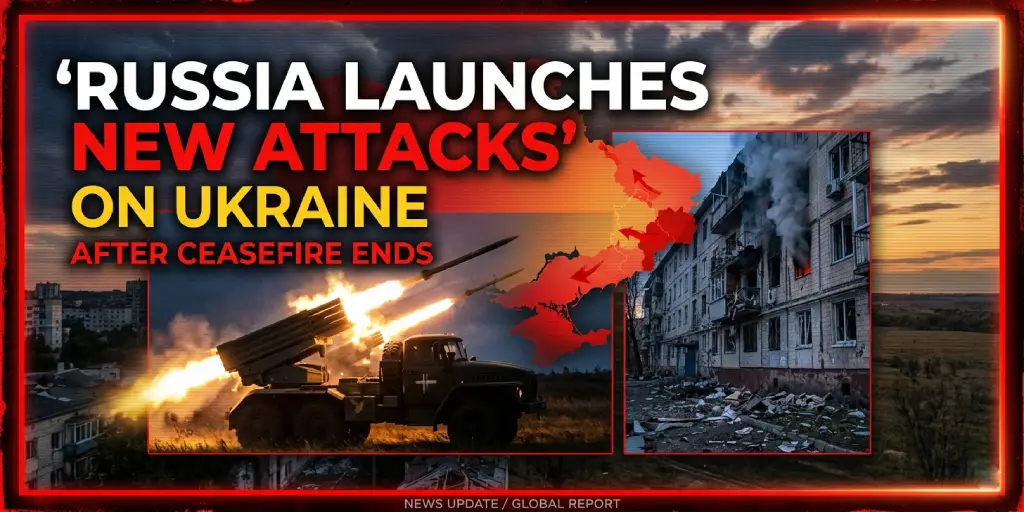
The short-lived three-day ceasefire in Ukraine has ended abruptly, with Russian forces resuming attacks in several regions. Ukrainian authorities reported artillery shelling and drone strikes hitting towns such as Kharkiv, Zaporizhzhia, and Dnipro, targeting both infrastructure and civilian zones. Residents described explosions shaking their homes, while emergency teams rushed to respond to fires and structural damage. Hospitals reported an influx of injured civilians, adding pressure to already overstretched medical facilities.
During the ceasefire, humanitarian organizations had cautiously resumed aid operations, providing food, clean water, and medical supplies to frontline communities. However, the renewed attacks have disrupted these efforts. Aid convoys are being rerouted as key roads and bridges suffered damage, delaying delivery. Local officials warned that tens of thousands of civilians are now facing food and water shortages. Many families remain confined to shelters or basements, with electricity outages reported in multiple towns, making access to heating, communication, and refrigeration increasingly difficult.
Military analysts note that short-term ceasefires often function as tactical pauses rather than meaningful steps toward lasting peace. Ukrainian forces are fortifying defensive positions near strategic urban centers, anticipating renewed offensives. Russian military activity appears focused on consolidating control over logistical routes, maintaining pressure along key supply lines, and targeting transport infrastructure. Both sides are reportedly repositioning artillery and increasing drone reconnaissance, highlighting that the pause did little to reduce overall hostilities.
International reactions have been swift. European Union and NATO officials expressed concern for civilian safety and the urgent need to maintain humanitarian corridors. Yet repeated violations of the ceasefire have deepened mistrust, and diplomatic efforts remain fragile. Observers stress that without a sustained commitment to dialogue, temporary pauses will likely only prolong the humanitarian crisis and regional instability.
The situation also underscores broader implications for energy and food supplies. Attacks on infrastructure, including power stations and transport networks, threaten the delivery of essential goods both locally and internationally. Analysts warn that continued conflict could disrupt agricultural production in Ukraine, a major grain exporter, and exacerbate global food insecurity. Meanwhile, the human toll continues to rise, with thousands displaced and communities struggling to cope with the relentless violence.
The resumption of attacks following the ceasefire highlights the fragile nature of temporary agreements in Ukraine. Civilian safety, humanitarian access, and regional stability remain under severe threat. Continuous monitoring of the conflict, combined with international support for aid operations, is critical to mitigate the impact on communities caught in the crossfire.