France is settling in for a long, tense stretch. What began as scattered demonstrations has grown into a wave of protests that shows no sign of fading, and officials are warning that the unrest could drag on for weeks. Now the anger has jumped the border. Italy is seeing its own flare-ups, raising fears that a single spark in one country could ignite a wider movement across Europe.
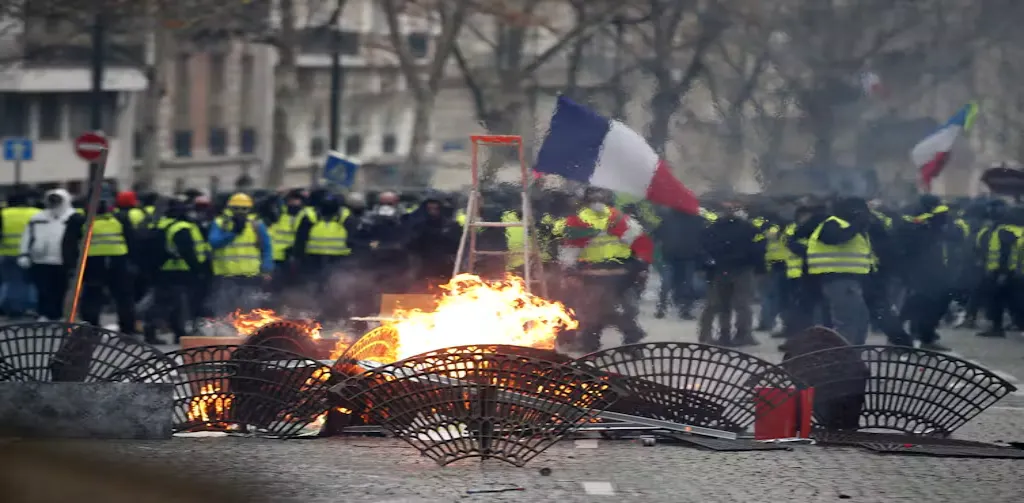
France has a long reputation for taking to the streets, but the current wave has caught even seasoned observers off guard. Crowds have gathered in Paris and spread to cities like Lyon, Marseille, and Toulouse, filling squares and blocking major roads.
The demonstrations started over frustrations that had been building for months. Rising living costs, stagnant wages, and anger at government decisions pushed people out of their homes and into public spaces. What might have been a one-off march turned into something bigger once the momentum took hold.
Protesters come from all walks of life. Students, workers, retirees, and union members have joined the same crowds, each carrying their own grievances but united by a shared sense that they are being ignored.
French authorities are openly admitting that this will not blow over quickly. Several factors are keeping the movement alive.
For one, the protests lack a single leader, which makes them hard to negotiate with or shut down. There is no one figure the government can sit across a table from. Instead, the energy comes from thousands of smaller groups organizing online and in neighborhoods.
Social media has also kept the fire burning. Videos of clashes and speeches spread within minutes, drawing in people who might otherwise have stayed home. Each viral clip pulls fresh faces into the crowd.
Then there is the stubbornness on both sides. The government has refused to back down on key decisions, and protesters have refused to go quiet. That standoff is exactly the kind of deadlock that can stretch on for weeks.
Life in parts of France has been thrown off balance. Public transport strikes have left commuters stranded, schools have shut their doors in some areas, and rubbish has piled up in cities where sanitation workers walked out.
Some demonstrations have turned violent. Police have used tear gas and water cannons to break up crowds, while small groups of protesters have clashed with officers and set fires in the streets.
For ordinary people, the disruption is becoming part of daily life. Getting to work, picking up children, and running errands now come with the question of whether the roads will be blocked or the trains will be running.
What worries European leaders most is that the anger has not stayed in France. Italy is now seeing its own protests, with crowds gathering in Rome, Milan, and other cities.
The grievances in Italy echo those across the border. People there are also struggling with the cost of living, job insecurity, and a feeling that those in power are out of touch. Watching France erupt seems to have emboldened them, offering a sense that frustration can be turned into action.
Italian authorities are watching nervously. They know how quickly a few demonstrations can snowball into something far larger, especially when people in different countries start feeling like they are part of the same fight.
This is not the first time unrest has rippled across the continent. Europe has a history of protest movements that leap from one nation to the next, feeding off shared struggles and a sense of solidarity.
When people in one country see others standing up, it often gives them the courage to do the same. Economic pressure does not stop at borders, and neither does anger. A policy that squeezes families in France can mirror the pressures faced by households in Italy, which makes it easy for a movement to find common ground.
That is exactly what has leaders on edge. A protest wave that spans multiple countries is far harder to contain than a single national flare-up.
French officials are trying to balance firmness with caution. They want to keep order without pouring fuel on the fire. A heavy-handed response risks making the crowds angrier, while appearing weak could embolden them further.
Behind the scenes, there is pressure to find some kind of compromise. Talks with unions and community groups may offer a way out, but so far neither side seems ready to give much ground.
In Italy, the government is taking notes from its neighbor. Leaders there are weighing how to respond to their own growing demonstrations before they reach the scale seen in France.
Weeks of protests do more than disrupt daily life. They hit the economy hard. Shops lose customers when streets are blocked. Tourism suffers when visitors see images of burning barricades. Strikes slow down transport, factories, and public services.
The longer this drags on, the heavier the toll becomes. Businesses already dealing with tight margins face fresh losses, and investors grow wary of instability. For countries still recovering from earlier economic shocks, prolonged unrest is the last thing they need.
The days ahead look uncertain. French authorities have made it clear they expect the protests to continue, and the spread into Italy suggests the movement may still be growing rather than fading.
Much depends on whether governments can offer something that cools the anger, or whether the standoff hardens. If neither side budges, Europe could be in for a long and turbulent stretch.
For now, millions are watching closely. People in France and Italy are waiting to see whether their voices force a change, while leaders across the continent brace for the possibility that the unrest could spread even further. The streets have become the stage, and the next act is anyone’s guess.