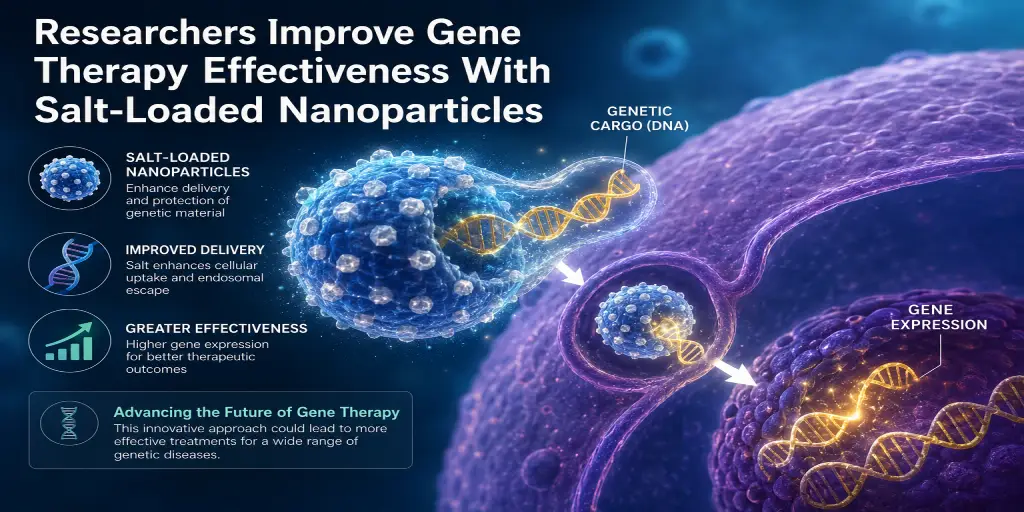
This research is important because gene therapy depends heavily on delivery. A treatment can be powerful in theory, but if it cannot reach the correct place inside cells, its real-world impact becomes limited.
The salt-loaded nanoparticle method may improve gene therapy effectiveness without requiring scientists to build a completely new delivery system. That is one reason the discovery is gaining attention. A simpler design may be easier to study, scale, and adapt for future treatments.
The finding could also support the development of mRNA vaccines and gene-editing therapies. These treatments rely on delicate genetic material that must be protected during delivery. Better endosomal escape could mean more of the medicine reaches its target.
For patients, this could eventually lead to treatments that work more efficiently, use lower doses, or become easier to manufacture. However, the research is still in an early scientific stage. It is not yet a treatment available in hospitals or clinics.
More studies will be needed to confirm safety, effectiveness, and long-term results. Researchers must also test whether this method works across different diseases, cell types, and treatment platforms.
Still, the discovery adds momentum to one of the fastest-growing areas in modern health care. Gene therapy is designed to treat disease at its root by targeting genetic instructions inside the body. Instead of only managing symptoms, these therapies aim to correct or influence the biological cause of illness.
That approach has already changed the outlook for some rare diseases. But cost, access, delivery, and safety remain major challenges.
The new salt-loaded nanoparticle strategy does not solve every problem in gene therapy. But it may help address one of the most difficult ones: getting fragile genetic material out of cellular traps and into action.
If future research confirms these results, the discovery could become an important step toward more effective mRNA vaccines, gene therapies, and personalized treatments in the United States and worldwide.
For now, the message is clear. Sometimes, a major medical improvement does not begin with a complex new invention. It can begin with a simple idea used in a smarter way.