







U.S. Job Market Slows as Unemployment Rises Ahead of Federal Reserve Decision

U.S. Job Market Slows

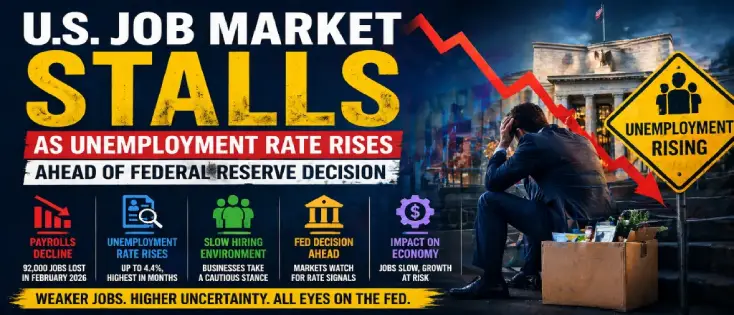
The U.S. job market is exhibiting symptoms of stalling as unemployment climbs and job growth slows. This trend raises concerns about the broader economic picture and comes just before the Federal Reserve’s crucial interest rate decision, which may have an impact on borrowing costs and overall GDP. Payrolls Decline, Unemployment Rises The most recent February 2026 jobs report reported a 92,000 job loss, indicating a rare payroll fall and reduced labor demand.

The unemployment rate rose to 4.4 percent, the highest level in previous months. Analysts had predicted modest growth, but both the private and public sectors experienced declines. Healthcare and transportation industries, which were once strong employers, suffered setbacks due to manpower shortages and rising operational expenses.This has created a cautious climate in which businesses are unwilling to expand while keeping their current staffing numbers.

Impact on the Federal Reserve The labor market is a major consideration in Federal Reserve policy choices. The downturn has generated debate among economists regarding the central bank’s future steps. Some argue that slower job growth could support prospective interest rate reduction to boost hiring, while others caution that inflationary pressures and rising energy costs may keep the Fed cautious.

The upcoming Fed meeting will be widely scrutinized for clues on how policymakers will strike a compromise between employment concerns and inflation management. Effect on Employees and Employers Slower employment growth might result in longer job searches, less negotiating leverage, and smaller wage gains for American workers.

Manufacturing and logistics are very competitive employment sectors. Employers are delaying hiring and growth plans due to uncertainties. This conservative attitude may weaken consumer confidence and spending, harming the overall economy. Looking ahead. Despite the slump, the labour market has not collapsed.

Certain sectors, such as professional services and healthcare, continue to add jobs, but at a slower rate. Economists estimate that unemployment will stay high in 2026 if hiring does not improve. Key takeaway: While the US economy confronts problems, careful attention to labor data and Federal Reserve policies will shape company strategies and economic expectations in the months ahead.